Shanghai OKRO Construction Technology Co., Ltd.

Independent Building
Safety Inspection

Independent Judgment · Objective Conclusions · Citable Technical Findings

OKRO is an IAS-accredited ISO/IEC 17020 Type A inspection body specializing in independent third-party firestopping inspection (ASTM E2174 / E2393) and gas suppression system integrity testing (NFPA 2001 / ASTM E3038). Our reports are ILAC-MRA recognized in 60+ countries.

Scroll
Core Inspection Services

Two Specialized Inspection Service Lines

OKRO addresses the critical unverified gap between construction completion and functional performance — delivering independent, quantifiable, and traceable technical findings that designers, building owners, insurers, and regulatory authorities can cite with confidence.

01

Firestopping Inspection

Independent third-party assessment of firestopping penetrations, materials, and post-construction interference per ASTM E2174 and E2393. We verify whether installed firestopping systems genuinely perform their designed passive fire protection function — not just whether they appear complete.

  • Penetrant-to-Method Compatibility Assessment
  • Material Continuity & Fire Integrity Verification
  • Post-Construction Interference Inspection
  • Design Assumption Conformance Review
02

Gas Suppression System Integrity Testing

Door fan pressure testing per NFPA 2001 and ASTM E3038 to verify enclosure airtightness meets design assumptions. We quantify leakage paths, measure design deviations, and confirm whether the protected space can maintain the required agent concentration for the specified hold time.

  • Enclosure Leakage Characterization (Door Fan Test)
  • Leakage Path Identification & Mapping
  • Design Deviation Quantification
  • Non-Disruptive Testing Protocol
Standards Compliance
ASTM E2174 / E2393 / E3038 · NFPA 2001
Accreditation
IAS Accredited · ILAC-MRA Recognized in 60+ Countries
Independence
ISO/IEC 17020 Type A · Quantifiable · Traceable
Service 01 — Passive Fire Protection

Firestopping
Inspection

"In building fire protection, firestopping is rarely the most visible element — yet it often determines the path and consequence of fire spread. When firestopping failures are finally recognized, it is often during post-incident review."

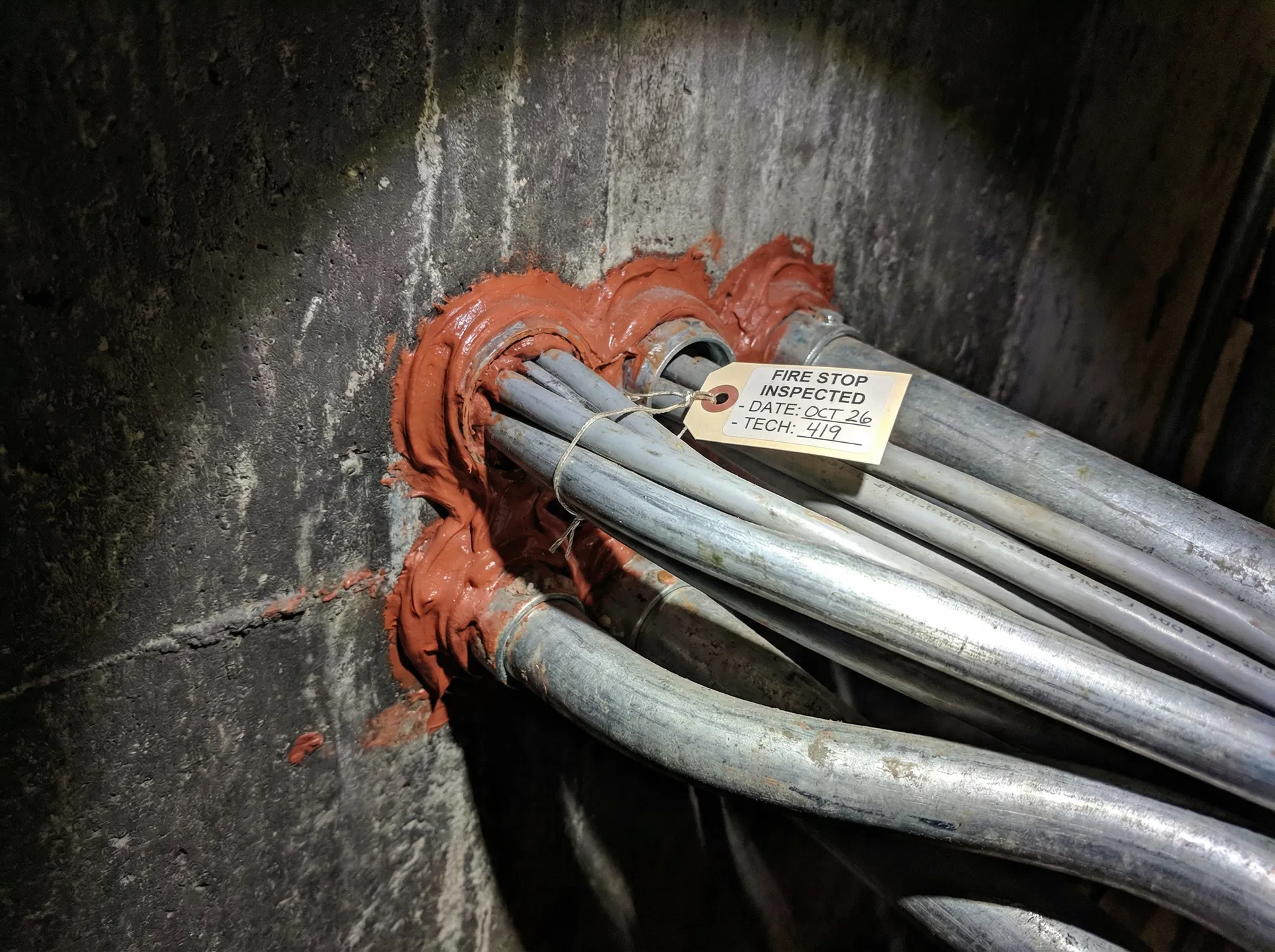
OKRO's firestopping inspection service addresses the unverified gap between 'construction complete' and 'function verified.' Conducted per ASTM E2174 and ASTM E2393, our independent third-party inspection determines whether installed firestopping systems genuinely perform their designed passive fire protection function — not merely whether they appear complete on the surface.
Field Judgment Over Documentation
We assess whether actual site conditions satisfy the prerequisites for each firestopping assembly to perform its fire compartmentation function — going beyond paperwork review to physical verification.
Appearance Does Not Imply Fire Integrity
A smooth, finished surface does not guarantee internal material continuity or fire resistance. Partial compliance does not establish overall passive fire protection integrity.
Findings Carry Citation Value
Our inspection conclusions are clear, technically grounded, and citable by designers, building owners, insurers, FM risk managers, and regulatory review authorities.
Firestopping inspection
ASTM Standards
E2174 · E2393
Value Proposition

The value of independent firestopping inspection is not a surface-level 'pass' conclusion. It lies in helping decision-makers clearly identify which penetration seals have a credible, verifiable basis — and which locations still constitute a potential fire compartmentation risk.

Credible, verified firestopping seals
Fire compartmentation risk locations flagged

Core Firestopping Assessment Criteria

01
Penetrant-to-Method Compatibility
Whether the penetrant type (pipe, cable, duct) is compatible with the firestopping method and listed system applied.
02
Material Continuity & Fire Integrity
Whether sealant is continuous and complete, with no gaps, breaks, voids, or localized failure that would compromise fire resistance.
03
Post-Construction Interference
Whether the sealed penetration has been damaged, weakened, or disturbed by subsequent trades or construction activities.
04
Design Assumption Conformance
Whether site conditions match original design assumptions, fire-rated assembly specifications, and intended use scenarios.

Firestopping Inspection Application Scenarios

Data Centers, Server Rooms & Electrical Rooms
Critical infrastructure where fire compartmentation integrity directly affects business continuity and loss outcomes.
Semiconductor Fabs, Pharma & Hi-Tech Facilities
High-value, high-risk environments where firestopping compliance is required by FM, insurers, and regulatory authorities.
Projects Requiring Independent Third-Party Verification
Providing building owners, insurers, FM risk managers, and review authorities with objective, citable firestopping inspection findings.
Service 02 — Clean Agent Systems
Data center with gas suppression system
ASTM E3038
Common Industry Misconceptions
Equipment installed and control logic integrated — system considered complete and effective
Actual agent discharge testing rarely performed on-site due to cost and operational disruption
Enclosure airtightness — the fundamental prerequisite for suppression effectiveness — is almost never independently verified

Gas Suppression
Integrity Testing

"System activation does not equal effective suppression. The core question: after agent discharge, can the protected enclosure maintain the required design concentration for the specified hold time?"

OKRO's gas suppression system integrity testing — conducted per NFPA 2001 and ASTM E3038 using the door fan pressure test method — verifies whether the prerequisite for effective clean agent suppression is met. A fully equipped system does not guarantee the protected enclosure can maintain sufficient agent concentration for the required hold time.

1
Complete Configuration ≠ System Effectiveness
Equipment completeness does not guarantee the protected space can maintain the required agent concentration for the design hold time specified by NFPA 2001.
2
Non-Disruptive Door Fan Testing
At critical facilities such as data centers and semiconductor fabs, ASTM E3038 door fan pressure testing is conducted under controlled conditions with minimal operational impact.
3
Findings That Support Real Decisions
Our quantified test results directly support decisions on remediation, enclosure optimization, or risk acceptance — providing a factual basis for insurers and FM.
The Core Question

"When a real fire occurs — will this clean agent suppression system perform as the design intended?"

Gas Suppression Integrity Testing Process

01
Enclosure Leakage Characterization
Door fan pressure test to measure and analyze the overall leakage rate of the protected enclosure per ASTM E3038.
02
Leakage Path Identification
Identify and map potential leakage paths at doors, windows, cable penetrations, gaps, and firestopping deficiencies.
03
Design Deviation Quantification
Quantify the deviation between actual measured airtightness and the design model required by NFPA 2001.

Gas Suppression Testing Application Scenarios

Data Centers & Server Rooms
The primary environment for clean agent suppression systems — enclosure airtightness directly determines whether agent concentration can be maintained for the required hold time.
Semiconductor Fabs & High-Value Equipment Areas
High equipment value and significant downtime costs demand verified, quantified evidence of suppression system effectiveness.
Projects Requiring Proof of Suppression Effectiveness
Providing building owners, FM risk managers, insurers, and regulatory authorities with objective, ILAC-recognized technical evidence.
Accreditation & Standards

Internationally
Recognized Accreditation

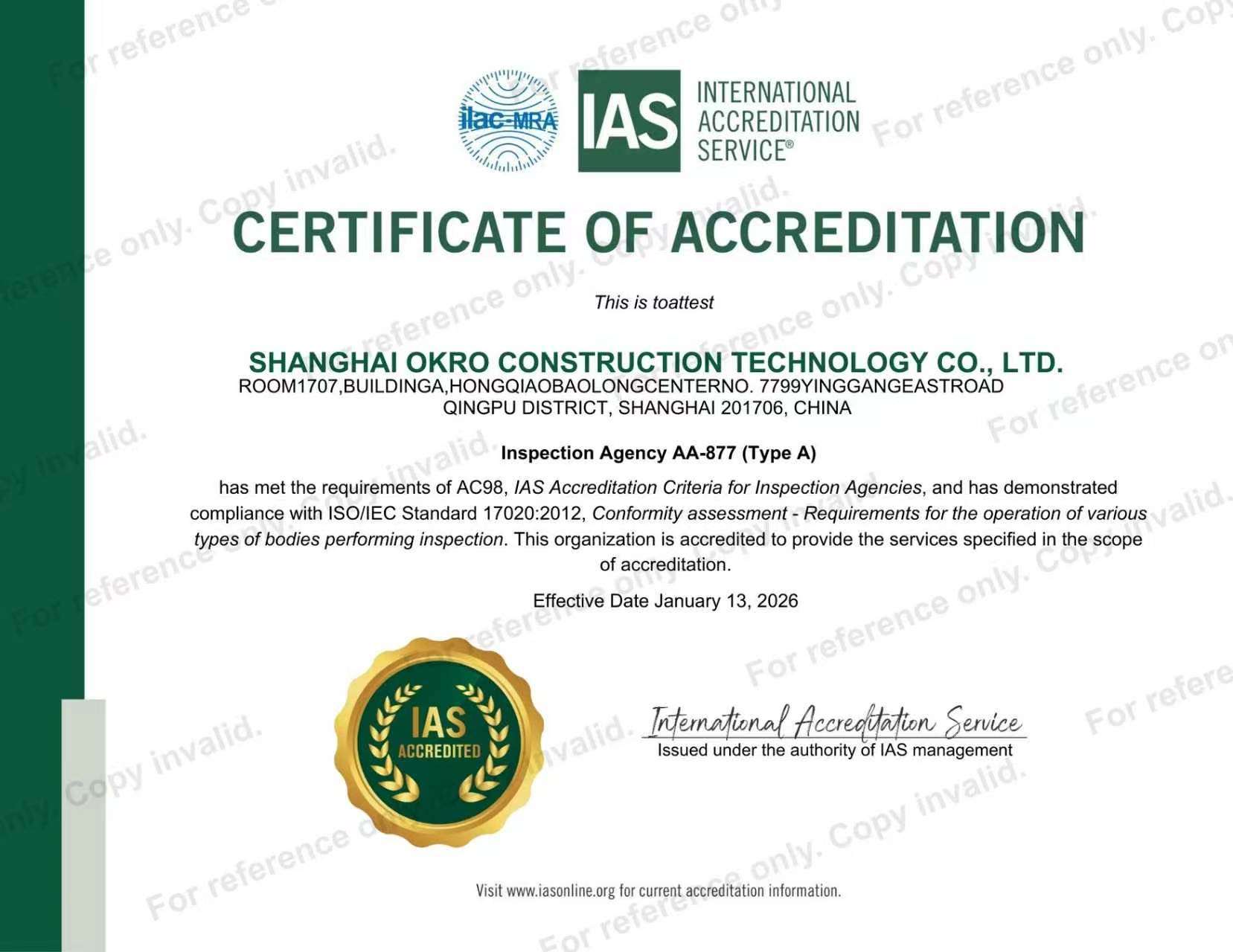
OKRO holds ISO/IEC 17020 Type A inspection body accreditation issued by IAS (International Accreditation Service). Through the ILAC-MRA mutual recognition arrangement, OKRO's firestopping inspection and gas suppression testing reports are recognized in over 60 countries and regions — satisfying international insurers, FM, and multinational corporate compliance requirements.
IAS — International Accreditation Service
Accredited By
IAS — International Accreditation Service
ILAC-MRA — International Laboratory Accreditation Cooperation
Signatory To
ILAC Mutual Recognition Arrangement (MRA)
ISO/IEC 17020 Type A Accreditation
IAS accreditation as an ISO/IEC 17020 Type A inspection body — the highest level of independence — provides internationally recognized validation of OKRO's technical competence and impartiality.
ILAC-MRA Global Recognition
ILAC Mutual Recognition Arrangement membership ensures OKRO's inspection reports are accepted in 60+ countries, satisfying international insurers, FM, and multinational compliance teams.
ASTM International Standards
All inspections and tests conducted per ASTM E2174, E2393, and E3038 — the definitive international benchmarks for firestopping inspection and gas suppression system integrity testing.
Quantifiable, Traceable & Citable
Independent third-party verification with results that are quantifiable, traceable, and suitable for citation by regulatory authorities, insurers, FM, and review bodies.
IAS CERTIFICATE OF ACCREDITATION
IAS Certificate of Accreditation — Shanghai OKRO Construction Technology Co., Ltd.
Certificate of AccreditationAA-877
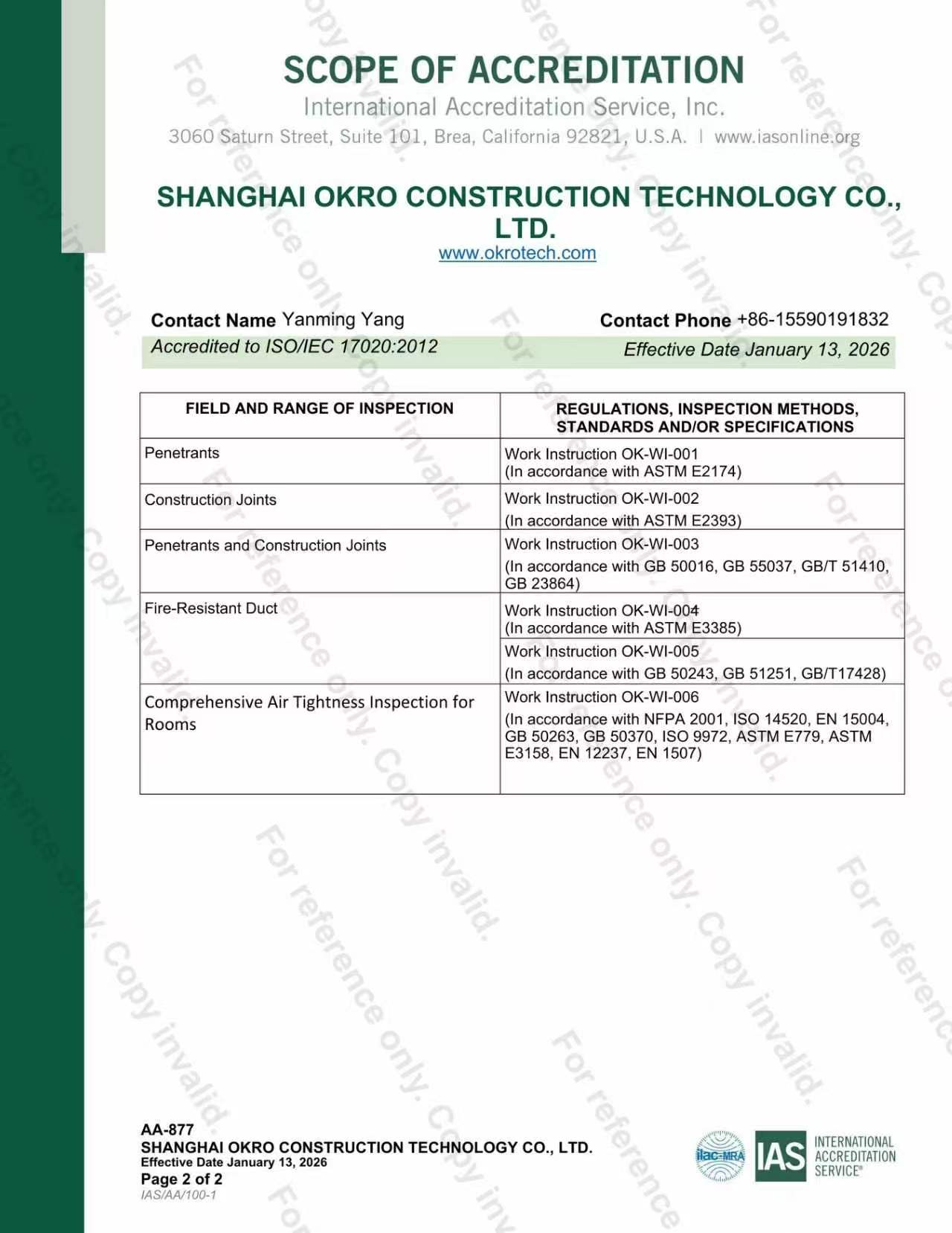
IAS Scope of Accreditation — Shanghai OKRO Construction Technology Co., Ltd.
Scope of AccreditationEffective Jan 13, 2026
Get In Touch

Contact OKRO

Contact OKRO for firestopping inspection, gas suppression integrity testing, or to discuss your project's building safety compliance requirements. We respond within 1–2 business days.

Location
Shanghai, China
上海欧克罗建筑科技有限公司

Ready to start your project?

Email our service team and we will respond within 1-2 business days.

[email protected]
Accreditation
IASILAC-MRA
IAS Accredited · ILAC-MRA Signatory · ISO/IEC 17020 Type A